Experiential LearningFrom Classroom Knowledge to Real-World Impact
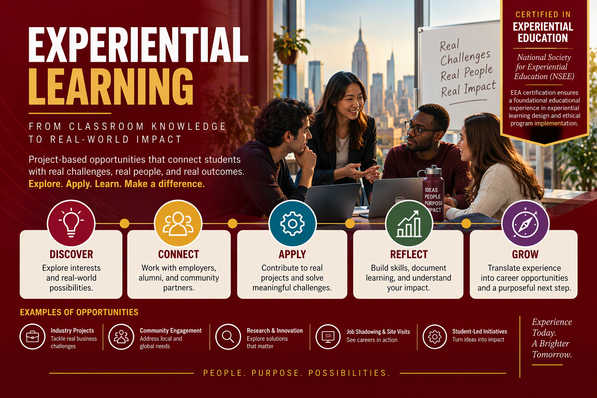
Certified in Experiential Education
I earned the Experiential Education Academy certificate through the National Society for Experiential Education. The EEA is a nationally recognized certificate program that provides experiential educators with foundational knowledge in theory and practice. The credential is earned by completing five core workshops and one elective, with an emphasis on pedagogically relevant learning design, ethical program implementation, reflection, assessment, and experiential education methodologies.
The certification strengthens my ability to:
- Apply grounded theoretical frameworks and evidence based practices
- Design purposeful and pedagogically relevant learning experiences
- Incorporate ethical principles and best practices
- Use reflection to convert experience into learning
- Align assessment with intended outcomes
- Strengthen programmatic structures
- Adapt experiential education concepts to specific student and institutional needs
- Collaborate with a network of experiential educators and administrators
|
|
I design project based experiential learning opportunities that connect students with real challenges, professional relationships, and meaningful outcomes. My approach moves students beyond simply observing the workplace. Students actively contribute, solve problems, receive feedback, reflect on their learning, and translate the experience into competencies they can communicate to employers. These opportunities may include employer sponsored projects, alumni-led challenges, community-engaged work, applied research, design sprints, job shadowing, site visits, and student-led initiatives. Each experience is intentionally structured to help students explore interests, practice career-readiness competencies, understand professional environments, and produce evidence of their growth. My model follows five connected stages:
DiscoverStudents explore their interests, strengths, values, and curiosities while gaining exposure to industries, organizations, and real-world challenges. ConnectStudents engage with alumni, employers, faculty, peers, and community partners who provide context, guidance, feedback, and access to professional environments. ApplyStudents contribute to authentic projects, address meaningful questions, collaborate with others, and apply academic knowledge to situations that do not always have one predetermined answer. ReflectStudents examine what they learned, how they approached the work, which competencies they developed, where they encountered challenges, and how the experience changed their understanding of possible career paths. Intentionally structured reflection is central to turning an activity into lasting learning. Grow
Students translate the experience into career language. They identify accomplishments, create portfolio artifacts, strengthen professional stories, and determine an informed next step toward further exploration, mentoring, internships, employment, or continued education.
My Project Based Learning Philosophy
I believe experiential learning should be more than an isolated internship or an optional activity reserved for students who already know what they want to pursue. Effective experiential education should be: - Intentional: Every project begins with defined learning and developmental objectives.
- Authentic: Students engage with real questions, challenges, organizations, and stakeholders.
- Accessible: Opportunities should be available to students across majors, backgrounds, and levels of professional experience.
- Relationship-driven: Alumni, employers, faculty, and community partners participate as collaborators, mentors, and sources of feedback.
- Competency-based: Students practice communication, teamwork, critical thinking, professionalism, leadership, technology, and career self-development.
- Reflective: Structured reflection helps students understand what happened and what the experience means.
- Assessable: Learning, participation, competencies, artifacts, partner feedback, and next steps can be documented.
- Developmental: Each experience should prepare students for a more advanced relationship, responsibility, or opportunity.
The objective is not simply to give students something to add to a résumé. It is to help students become more capable, confident, reflective, and prepared to navigate what comes next.
Examples of Opportunities
My project based model can support:
- Industry projects: Students tackle defined business, operational, communications, technology, or strategic challenges.
- Community engagement: Students collaborate with nonprofit, government, educational, and community partners on locally relevant needs.
- Research and innovation: Students investigate questions, test possibilities, and develop recommendations or prototypes.
- Creative briefs: Students produce campaigns, stories, designs, media, or other portfolio-ready work.
- Job shadowing and site visits: Students observe careers in context and connect workplace exposure to guided reflection.
- Design sprints: Students work in teams to understand a problem, generate ideas, test solutions, and present recommendations.
- Alumni-sponsored challenges: Alumni provide authentic problems, professional context, coaching, and feedback.
- Student-led initiatives: Students transform an idea into a tangible project, event, resource, enterprise, or community contribution.
|
|
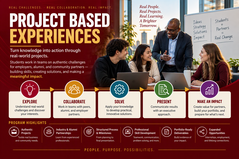
I create project based experiences that connect students with real challenges, real people, and real outcomes, helping them transform knowledge into capability, experience into confidence, and learning into a meaningful next step.
|
Structured, project based experiences in which students work in teams on authentic challenges for employers, alumni, and community partners. Unlike programs built around observation or loosely defined assignments, my approach includes negotiated deliverables, defined team roles, scheduled milestones, sponsor feedback, executive-level presentations, and intentional reflection. Students do not merely complete tasks. They contribute to decisions, develop professional competencies, and translate their experience into portfolio evidence, stronger career stories, and meaningful next steps.
|
|
|